Cuttings in glass, week by week
Roots take between six days and six weeks, and almost every failure happens in the first hour, at the cut. Here is the whole sequence, with the plants that will not do it in water at all.
Everything that happens to a cutting is decided in the first ten seconds, while the knife is still in your hand. Cut in the wrong place and the stem will sit in clean water, at the right temperature, in the right light, and rot anyway.
The right place is just below a node. A node is the small swelling where a leaf joins the stem, and the Missouri Botanical Garden is direct about why it matters: roots grow most easily from that point, and a length of bare stem left below it tends to rot instead.
So the first cut is the whole job, and the rest of this is bookkeeping.
Take four to six inches, and take them from a plant that is well
Four to six inches is the working length. Shorter and there is not enough stem to handle without bruising it. Longer and you get a lanky plant rather than a compact one.
Penn State Extension adds the condition people skip: start from a plant that is free of disease and insects, and not under stress from heat, drought or too much light. A cutting is a copy. It inherits whatever the parent was carrying, including the parent’s bad month.
Use a sharp blade and a clean one. A crushed stem is a wound that takes longer to close than a cut one.
Then strip every leaf that would sit under the water, and take off any flowers or buds. A flower is not a decoration on a cutting. It is a claim on the same stored energy the stem needs for roots, and the cutting cannot fund both.
The first hour
Put the cutting into water straight away. There is no waiting step and nothing to seal.
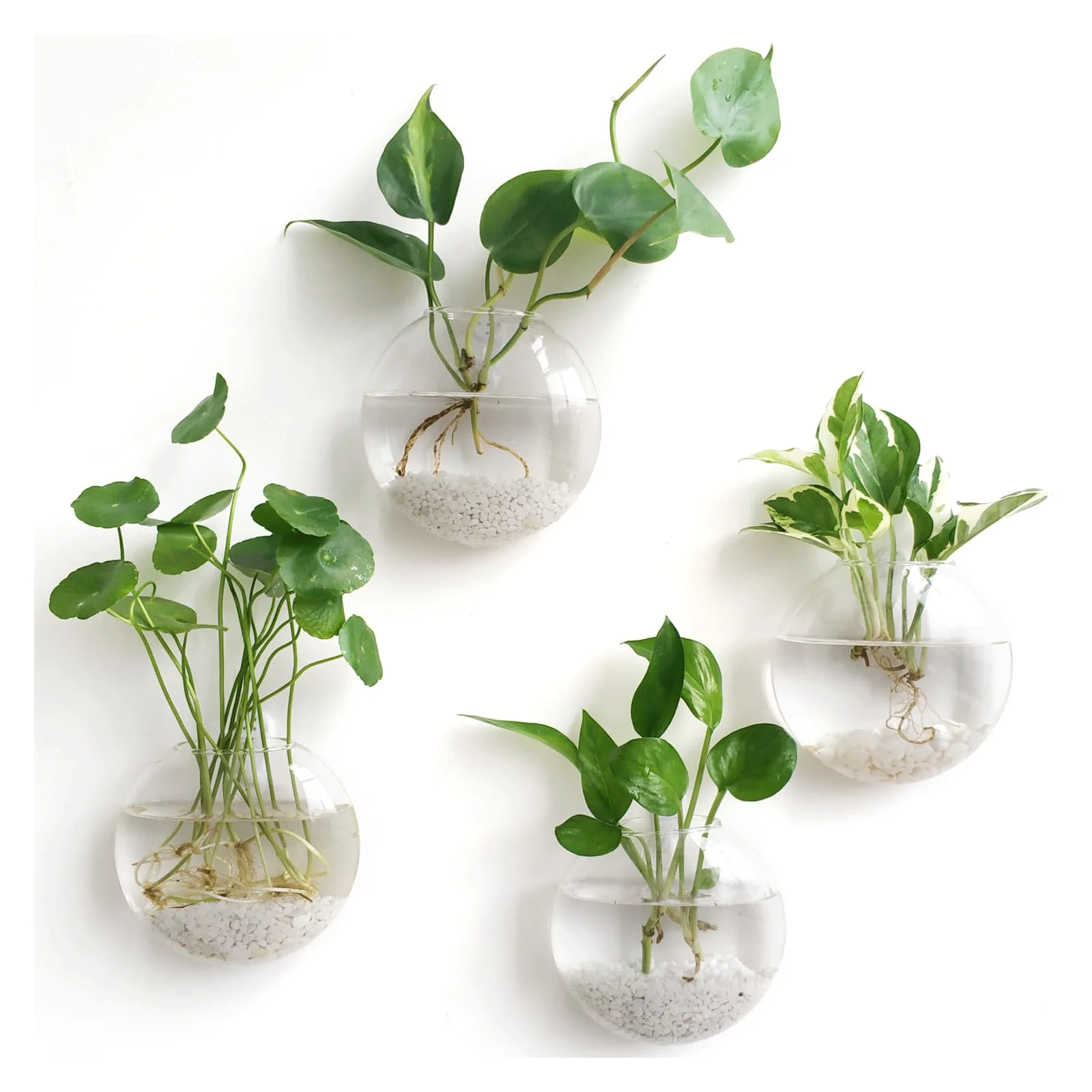
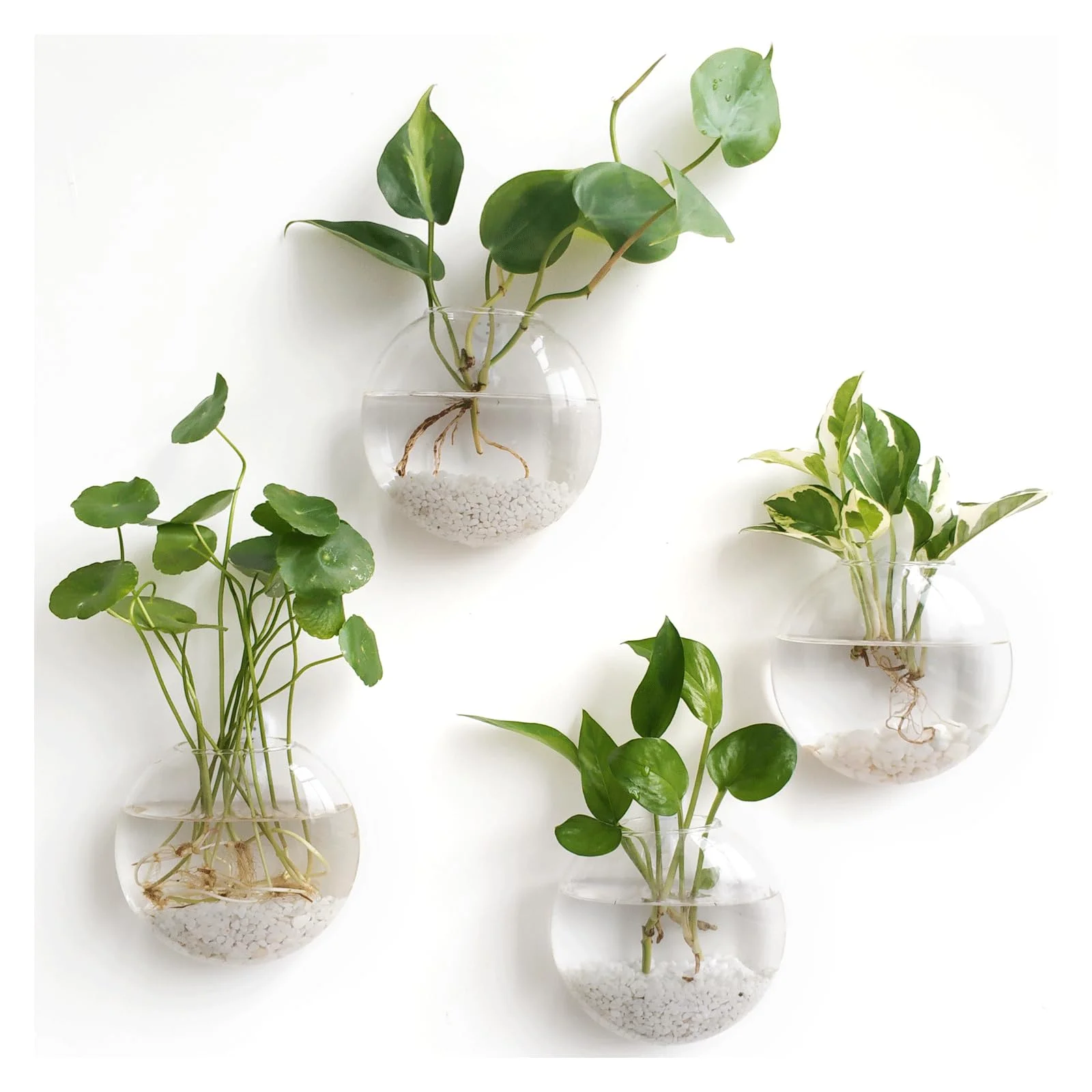
Then choose where it lives, because that decision is the difference between a project you watch and a project you find again in November. A test tube holds one stem, grips it without a collar, and lifts out of its slot to be rinsed. A bulb vase holds more water and so goes longer between changes, which suits a stem that will take six weeks. A wall rack puts the whole row at eye level, above the counter, where you see it every time you fill the kettle.
Bright indirect light, says the extension guidance, with a rooting temperature between 75 and 80 degrees Fahrenheit. Direct sun does two unhelpful things at once: it warms the water and it feeds algae.
The first week
For the first seven days the cutting runs on what it packed. It has no roots to draw water up, and it is still losing moisture through its leaves, so the leaves may droop. That is not always failure. Wait.
Change the water every three to five days. Fresh water carries dissolved oxygen. Standing water does not, and the smell tells you before the eye does.
Watch the clarity. Cloudy water is algae and bacteria, and it turns up faster in a sunny window than in bright indirect light. When it clouds, change it and move the glass. If it stays clear but smells sour, change it anyway.
Do not feed it. There are no root hairs to take anything up yet, and fertilizer in a vase mostly grows algae.
I take cuttings from other plants and place them in the glass holders and soon I can replant them and have more plants. I love to look at them on the wall while they are sprouting.
Judith Richardson, writing about the wall planters in July. The looking is not incidental. A row at eye level gets its water changed. A jar behind the kettle does not.
Weeks two to four
Somewhere in this window, white nubs appear at the node. They are soft and translucent, nothing like the wiry roots of an established plant, and they grow toward the glass rather than away from it.
How long it takes depends entirely on the plant. Six days at the fast end, six weeks at the slow end, and the split runs along one line: soft stems root, woody stems rot.
| Roots readily in water | Rots before it roots | What separates them |
|---|---|---|
| Begonia | Hibiscus | A soft stem takes up water at the cut, and a woody one resists it |
| Coleus | Citrus | Lignified stems decay at the cut end before roots appear |
| Polka-dot plant | Fast enough that a week is often the whole story | |
| Ivies | Reliable, and forgiving of a missed water change | |
| Philodendrons | Roots at almost every node, so they are the beginner plant |
If your cutting is from something woody and you want it anyway, water is the wrong medium and no vase will fix that. The extension guidance points at a rooting medium instead.
Do not move the cutting on the first white dot. Wait until there is a cluster, and until the roots are long enough to hold the stem steady when you lift it out of the glass.
Where the glass actually goes
Bright indirect light is easy to say and harder to point at in a real flat. In practice it is a north or east window with nothing between the glass and the sky, or a spot a foot or two back from a south-facing one. Direct sun through glass does two things you do not want at once: it lifts the water temperature past the comfortable band and it feeds algae, and you will see the second before you notice the first.
The rooting temperature the extension guidance gives is 75 to 80 degrees Fahrenheit, which in most homes means the warm side of the house rather than the cold one. A windowsill above a radiator swings hard between the two in a single evening, and a stem that keeps being cooked and cooled roots slowly if at all.
Then there is the practical question of whether you will remember it. A row on a wall bracket at eye level gets its water changed because you walk past it eight times a day. A jar on the back of the counter is behind the kettle within a week, and the first thing you notice about it is the smell. That is the whole argument for the wall rack, and it has nothing to do with how it looks.
Keep the glass clean while you are at it. Hard water leaves a film that clouds the view long before the water itself goes off, and a bottle brush and warm water takes it off in a few seconds. The point of glass is to see through it.
Four ways it goes wrong, and how to tell them apart
A cutting that fails usually tells you which mistake you made, if you look at the right end of it.
A cut end that has gone brown and soft while the leaves are still green is rot from below, and the cause is almost always stem left under the node. Take a fresh cutting from the same plant and cut it correctly; there is nothing to save here.
Water that clouds within two days is a light problem before it is a hygiene problem. Move the glass out of the sun, change the water and watch whether it stays clear for the usual three to five days.
Leaves that yellow from the bottom up while the water stays clean is usually the cutting spending its reserve. Check that you took the flowers off, and check the light: a cutting in a dim corner has nothing to run on.
And a cutting that sits in perfect water for a month and does absolutely nothing is often a woody stem doing exactly what the botanical garden says it will. Hibiscus and citrus are the named examples. They are not being difficult; they are being lignified, and a vase is the wrong tool.
Week six, and the honest problem with water roots
By six weeks a fast rooter has filled a test tube with white, and a slow one is showing its first serious growth. Look at color before length: healthy water roots are white or cream and firm. Brown, soft or slimy means the cutting is going the other way, and the cause is usually the cut rather than the care.
Then comes the step where a healthy-looking cutting is most often lost, and it is worth saying plainly. Roots formed in water are often weaker than roots formed in a rooting medium, and they adapt less easily to potting mix. That is not a folk belief. It is in the extension literature, and it is the reason a cutting can look perfect in glass on Friday and sulk in a pot on Tuesday.
Into soil
Use a pot with drainage and a mix that stays open rather than dense. Set the cutting at the depth it sat in water, no deeper, and firm the mix around the roots without packing it.
Water once, thoroughly, to settle everything. After that let the mix approach dryness before you water again. A pot kept saturated asks soft water roots to breathe in mud, and they will not.
Give it bright indirect light for the first weeks rather than full sun, and leave the feeding until the plant is clearly growing. New roots are not ready for a heavy dose of anything.
The one mistake that undoes all of it
You can pick the right vessel, mount the rack at exactly eye level, change the water every third day and wait the full six weeks. None of that survives a cut in the wrong place.
If you cut above the node, or leave an inch of bare stem below it, the rot starts at the stub and works upward while everything above it still looks well. The leaves yellow suddenly, the water clouds, and it reads like a transplant that went wrong or a cold night by the window. It was neither. It was the first ten seconds.
So: sharp blade, four to six inches, cut immediately below a node, lower leaves off, flowers off, into water. Everything after that is patience, and patience is cheap. If the cutting works and the pot it ends up in needs a place to hang, the Mkono collection keeps the hangers on one shelf and a piece on getting one into the ceiling.
One click away
Every price on this page is live at our retail partner, and every button opens the piece it sits under. Take the whole shelf at once, or go back up and take one thing.