How to hang a plant you will actually water
A dry pot weighs a pound. The same pot, watered, weighs four. Everything that goes wrong with a hanging plant goes wrong in the gap between those two numbers.
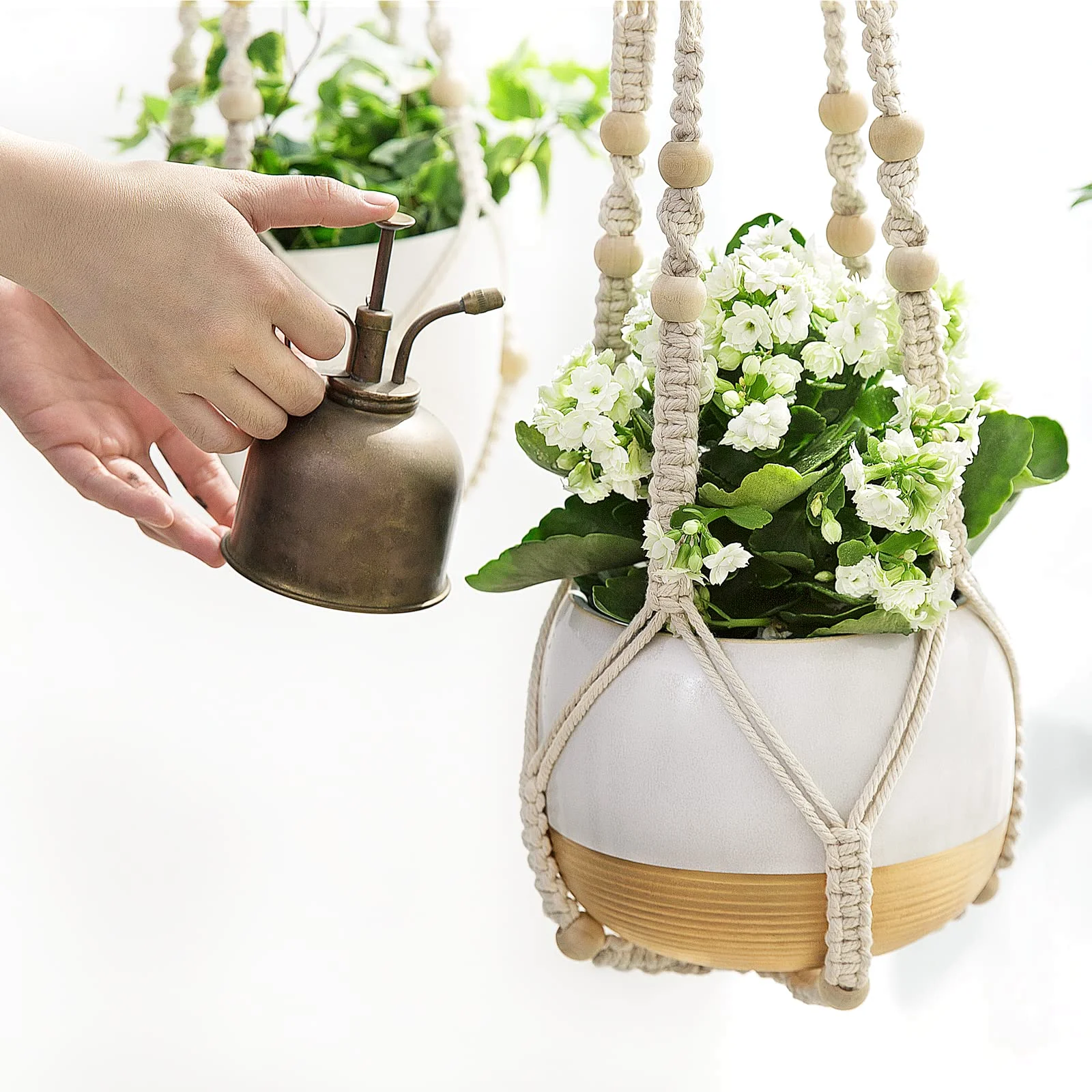
You hang the plant on a Sunday afternoon. The pot is light, the hook came out of the kitchen drawer, and the whole thing takes four minutes. The hanger looks good. The plant is centered in the window. Then you fill the watering can.
Thirty seconds later the hook tears out of the drywall and the pot hits the floor.
That failure is not about the knot, and it is not about the rope. It is about arithmetic, and the arithmetic is done with water.
The pot weighs four times what you think it does
A six-inch nursery pot of dry potting mix weighs roughly a pound. You can balance it on one hand while you find the hook. Water it through and the same pot weighs three to four pounds. An eight-inch glazed ceramic pot, wet, passes ten.
Soaked soil holds roughly its own volume in water, and water is heavy: a quart of it weighs about two pounds. None of that weight arrives gradually. It arrives in the thirty seconds it takes to empty a can, and it stays for days, until the plant drinks it or the room dries it out.
Almost everyone chooses the hardware for the dry state, because the dry state is the one they are holding when they choose. That is why the hook comes out on the first Sunday rather than in the second month.
| What is hanging | Dry | Watered | What it should hang from |
|---|---|---|---|
| 6-inch nursery pot | about 1 lb | 3 to 4 lb | A rated anchor, or better, a stud |
| 8-inch glazed ceramic pot | heavier than it looks | over 10 lb | A ceiling joist |
| Two-tier hanger, two 6-inch pots | about 2 lb | 6 to 8 lb | A ceiling joist |
| Three-tier hanger, three 6-inch pots | about 3 lb | 9 to 12 lb | A ceiling joist, nothing else |
The hanger itself adds almost nothing to those numbers. Cotton rope is light, an iron wall bracket weighs a few ounces, and the steel ring at the top weighs less than the beads on it. The variable is always the wet soil.
One thing the rope does do is stretch. Cotton gives a little under a wet pot during the first week and then stops. The knots tighten, the cradle settles, and after that the length is stable. So hang it dry, leave it a week, and only then water it. Plan for an inch of drop you did not order.
Drywall is a surface, not a structure
Half an inch of gypsum between two sheets of paper will hold a picture frame. It will not hold a gallon of water suspended in space, and a nail driven into it without a stud behind is relying on friction and crumbly rock.
A rated toggle or self-drilling anchor is what carries a load in drywall, and the rating is printed on the packet. Read it rather than guessing. Then remember that a hanging plant is not a static load: it swings when the door closes, and the number on the packet was measured on something that does not.
The safest rule is to ignore the drywall entirely and find the wood behind it. Studs in US framing usually sit sixteen inches apart, sometimes twenty-four. A screw into one of them will hold a heavy mirror, a cabinet or a shelf, and it will hold a wet pot without thinking about it.
The federal safety commission says the same thing in its own language. Its instruction for furniture with drawers, doors or shelves is to anchor it to the wall, and a federal stability rule for clothing storage units took effect on 1 September 2023. The tool list they publish is short: an anchoring kit, a drill, a screwdriver and a stud finder. It is the same list for a plant that weighs ten pounds wet.
Where the wood is
A stud finder is a small electronic device that reads density through the surface. Run it horizontally, mark where it wakes up, run it back from the other side, and drill between the two marks.
Ceilings are the same job with worse ergonomics. Joists are the beams holding up the floor above, spaced sixteen or twenty-four inches on center, and they carry more than any drywall anchor will. A heavy-duty metal ceiling hook screwed into a joist takes a wet ceramic pot and does not think about it.
This is where the tier count matters. Three wet six-inch pots on a seventy-inch three-tier hanger come to nine or twelve pounds, hanging from one point, swinging as a unit. That is a ceiling job. It is not a wall bracket job, and no anchor rated for a picture will make it one.
Wall brackets are for walls, and they want studs for a reason that has nothing to do with weight alone. The iron brackets in the Mkono range reach six, eight and ten inches out from the wall. The six-inch bracket keeps a small pot tight to the plaster. The eight clears most window trim. The ten clears a radiator or a deep sill, and it also multiplies whatever the pot does: four pounds on a ten-inch arm levers hard on the screw, and only a stud argues back.
Very nice brackets. Solid. I liked that they fit over the curtain rod but did not touch my low ceiling.
That is Carrie MacLean, writing about the six-inch brackets in April. It is worth reading twice, because it names the constraint most people find out about after drilling: the ceiling is lower than the plan.
The cord is the other hazard, and it is quieter
The same commission that warns about furniture warns about hanging cords, and the warning is blunt. A cord can strangle a child in moments, and it happens almost silently, with an adult in the room.
Single hangers in this catalog come at twenty-nine, thirty-five, thirty-nine and forty-three inches. The two-tier is forty-nine. The three-tier is seventy. Those lengths set where the pot sits, and they also set how much cord is left hanging below it.
The guidance is to move cribs, beds, furniture and toys to a wall away from cords, and to keep any dangling cord short. Only a cordless arrangement removes the hazard rather than reducing it, which is a plain way of saying that a nursery is the wrong room for a seventy-inch three-tier. Shortening a long cord by tying it up does not help either: a knotted-up cord leaves a loop, and a loop is the shape the warning is about.
A hanger can be shortened at the knot. It cannot be lengthened at all. So measure from the hook down to where you want the base of the pot to sit, then buy the next length above that figure and take up the difference at the top.
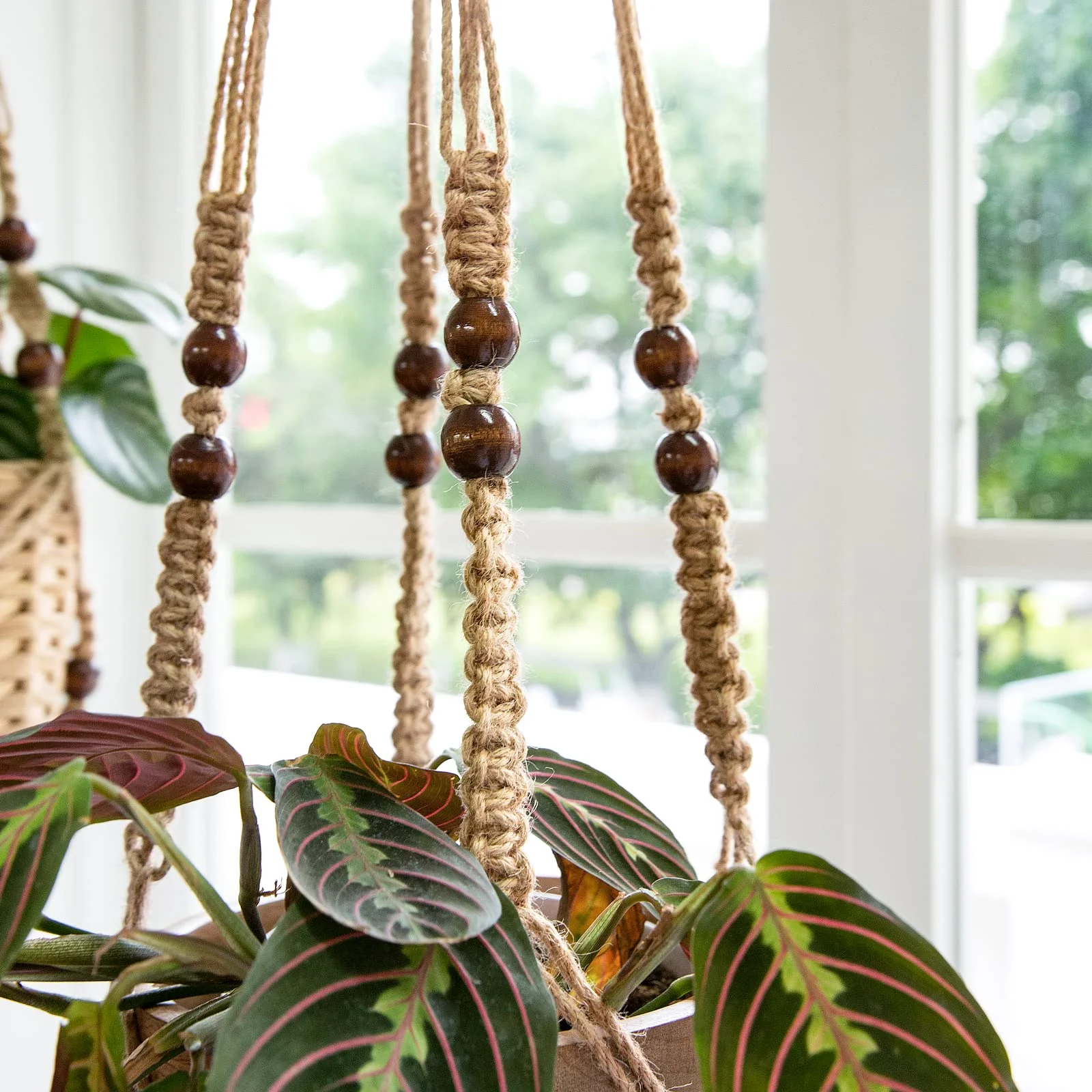
How to water it without lowering the room
Watering a hanging plant where it hangs spills. Water runs the drainage hole, marks the floor, drips on the sofa arm, and sits in the cotton where it does the rope no good at all. There are two answers that work.
The first is to lift it down over the sink. Unhook, carry, water, let it drain for half an hour, rehang. It is the method that never goes wrong, and it has two requirements: the hook has to be reachable, and you have to be able to lift the wet weight above your head. If you cannot lift four pounds over your head, do not hang four pounds over your head.
The second is to treat the outer pot as a cachepot with no drainage hole and water into it sparingly, measuring rather than drenching. Most houseplants would rather have the drenching, so this is a compromise, not an upgrade. Check for standing water afterwards and tip it out. A cachepot is decoration, not a reservoir.
What does not work is a saucer left under a pot that hangs. It tips, the water goes over the edge, and the load stops being centered.
If you rent
You do not want to drill the ceiling, and you still want the plant somewhere other than the windowsill. Three routes stay open.
A wall bracket into a stud makes one hole about a quarter of an inch across. That is a dab of filler and a dot of paint on the day you leave, and it is the smallest permanent mark on this list.
A floor-standing stand makes no hole at all. The metal stands the Mkono studio makes take an eight to ten-inch pot, and they cost you floor rather than plaster. That trade is worth making in a rented bedroom and worth refusing in a small one.
Adhesive hooks are the route that looks free and is not. The glue softens in heat and humidity, a sunny window supplies both, and the failure is sudden rather than gradual. Keep them for something that weighs what a postcard weighs.
Then there is the conversation. Most landlords treat a plant hook the way they treat a picture hook, especially if you offer to fill it yourself and you know the color of the paint. It is an easier conversation than the one about the hole a falling pot leaves.
A job for this afternoon
Hang one plant properly and the rest of them follow the same rules. Take a six-inch nursery pot with a trailing pothos in it, because pothos forgives almost everything and weighs almost nothing.
Find the stud. Drill the pilot hole. Fit the bracket or the hook. Hang the pot dry and leave it for a week while the cotton takes up its stretch. Shorten the knot if it has settled lower than you wanted. Then water it, and lift it down to the sink to do it.
Feel the weight on the way to the sink. That is the number the hook has been holding all week, and it is the only one that ever mattered. When you have carried it once, you will size the next one correctly without measuring anything at all. If the cuttings from that pothos are next, the Mkono studio keeps the glass for them on one shelf, and there is a longer piece about rooting them.
One click away
Every price on this page is live at our retail partner, and every button opens the piece it sits under. Take the whole shelf at once, or go back up and take one thing.